

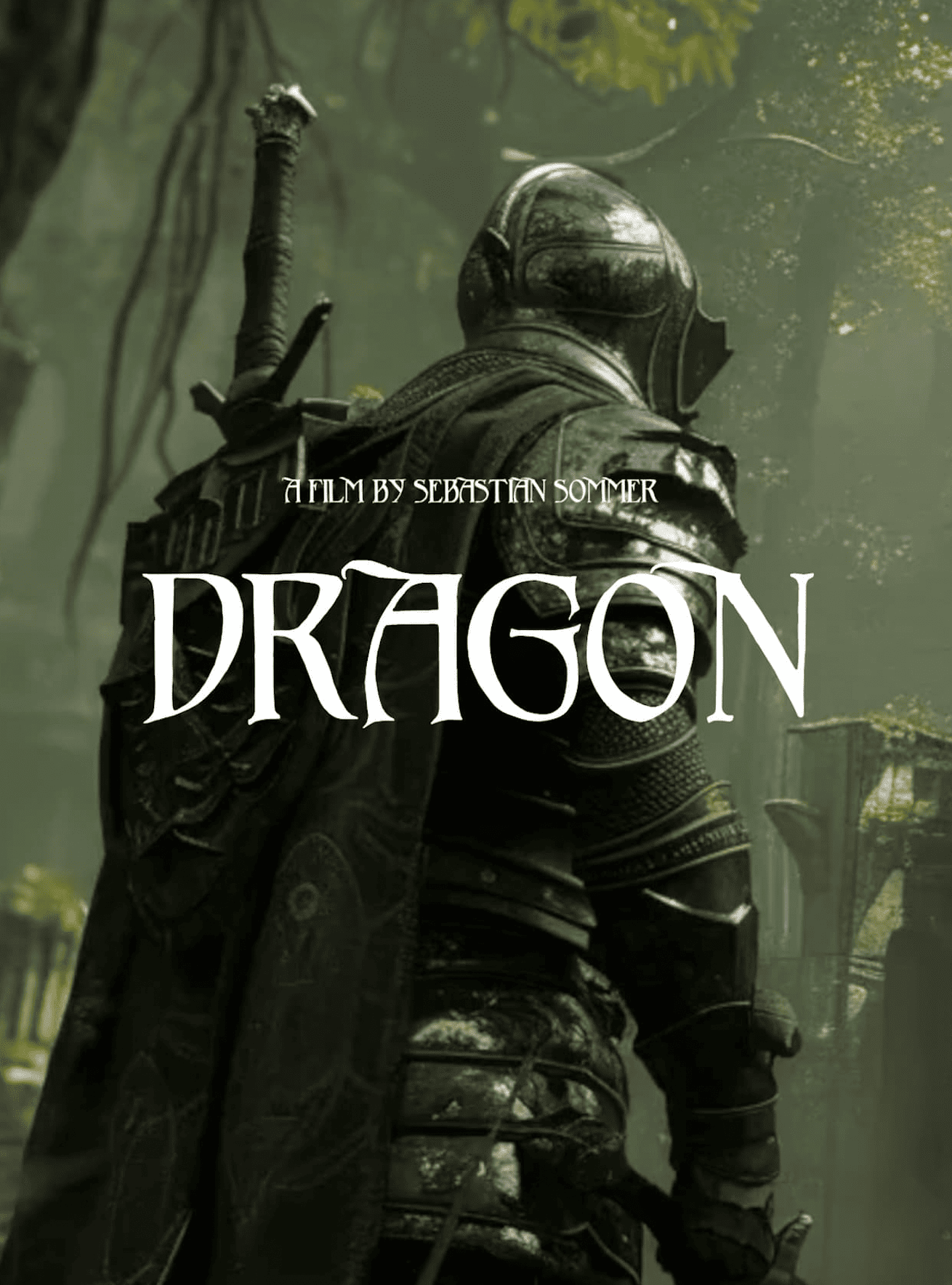
Sebastian Sommer’s debut feature Dragon (2024) invites viewers into a striking fantasy realm crafted with a deliberate ambiguity that feels both ancient and futuristic. Drawing on motifs from mythic quests and medieval storytelling, the film unfolds as a mosaic of vignettes and fragmented narrations rather than a conventional three-act plot. It structures itself like a series of dream‑like legends, each sequence contributing to a thematic tapestry of longing, heroism, and emotional residue.
Visually, Dragon stands out for its unconventional use of artificial intelligence tools to create an uncanny, unstable aesthetic. AI‑generated imagery gives the film a slightly surreal texture—characters who seem just beyond the physical, landscapes that echo both memory and myth. That imperfection is intentional: it reinforces the film’s dream-state logic and lyrical tone, anchoring Dragon in the territory of something you think you once dreamed and can’t quite quit.
Beyond its distinct look, Dragon is emotionally resonant. Reviews describe it as elegiac, mourning lost stories even as it rebuilds them. It’s less about characters and more about the emotional space they inhabit, wandering knights, fading realms, and the residual echo of legends passed down through time.